• Home
  • Bio
  • Music
  • Blog
  • Interview with Keegan Clark
  • Music Theory roundtable
  • Music Theory Course Beta
    • 1. Introduction
    • 2. Lesson one
    • 3. Rhythm Part One
    • 4. Rhythm Part Two
    • 5. Rhythm Part Three
  • First Gig in Charlestown Saturday 3/1/25

Department Of Industrial Accidents

  • Home
  • Bio
  • Music
  • Blog
  • Interview with Keegan Clark
  • Music Theory roundtable
  • Music Theory Course Beta
    • 1. Introduction
    • 2. Lesson one
    • 3. Rhythm Part One
    • 4. Rhythm Part Two
    • 5. Rhythm Part Three
  • First Gig in Charlestown Saturday 3/1/25

Department of Industrial Accidents Blog Post #7: Thursday, July 13, 2023, 11:40 p.m. E.S.T. 

Production

(mixingwithmike.com) Lesson 17: Functional Compression parts 1 and 2; With a basic understanding of transients and rms values now under my belt, I got more out of reviewing part 1 and then moving to part 2. Mike White, the course creator, talked about using compression to create depth and dimension in the 3D sound field by varying combinations of compression ratios, attack, and release. It was very edifying to hear how three-dimensional the mix became with slight adjustments in the relationship of those three compression parameters to all the different instruments in the mix. A key takeaway is that a fast release time pushes instruments further back in the mix while a slow release time has the opposite effect. Interestingly, he used copies of the SSL compressor on every track.

Theory

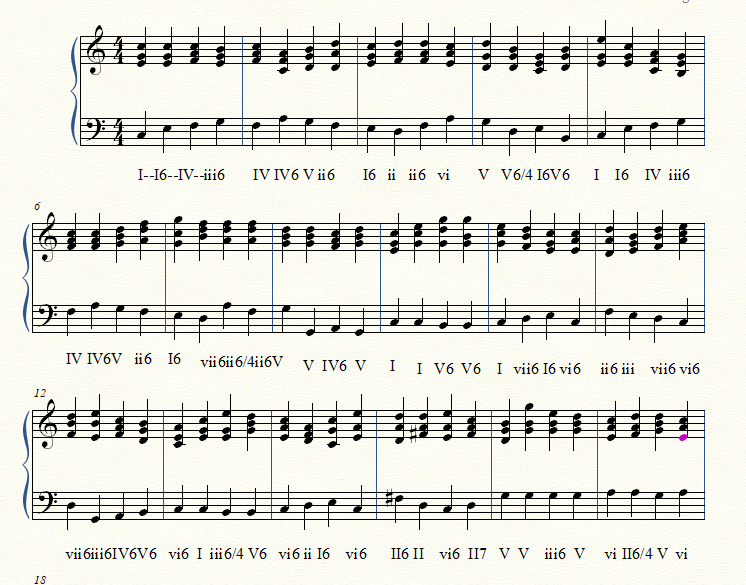
I decided it was time to get back to my theory review. I will be doing an alternating day approach between harmony and counterpoint. I am using ‘The Complete Musician’ by Steven J. Laitz. While I think the title is a little pretentious (mastering Western tonal harmonic practice and fundamental voice leading will definitely not make a musician ‘complete’) the exhaustive nature of the approach to tonal harmony as it was developed in the common practice period is impressive. Laitz demonstrates a thorough mastery of Western harmonic thinking from the common practice period through to more dissonant harmonic usage in 20th century music.  To put a cap on my recent review of the function of all 7 diatonic triads and 7th chords, I have decided to create a summary of all harmonic and voiceleading functions permissible in the limited scope of this system:
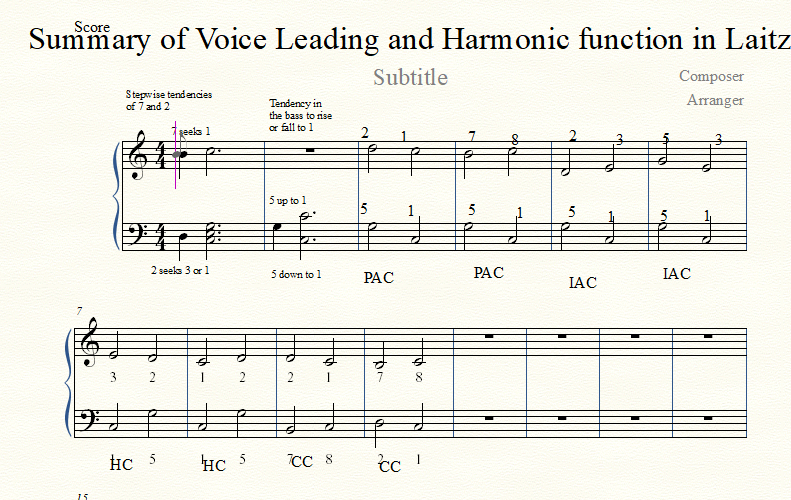
This will take some time, but when finished it will have served as a good final review and will also supply me with a type of musical shorthand for applying this information in my own musical output. I will be cleaning up the visual presentation in the score a bit.

Composition

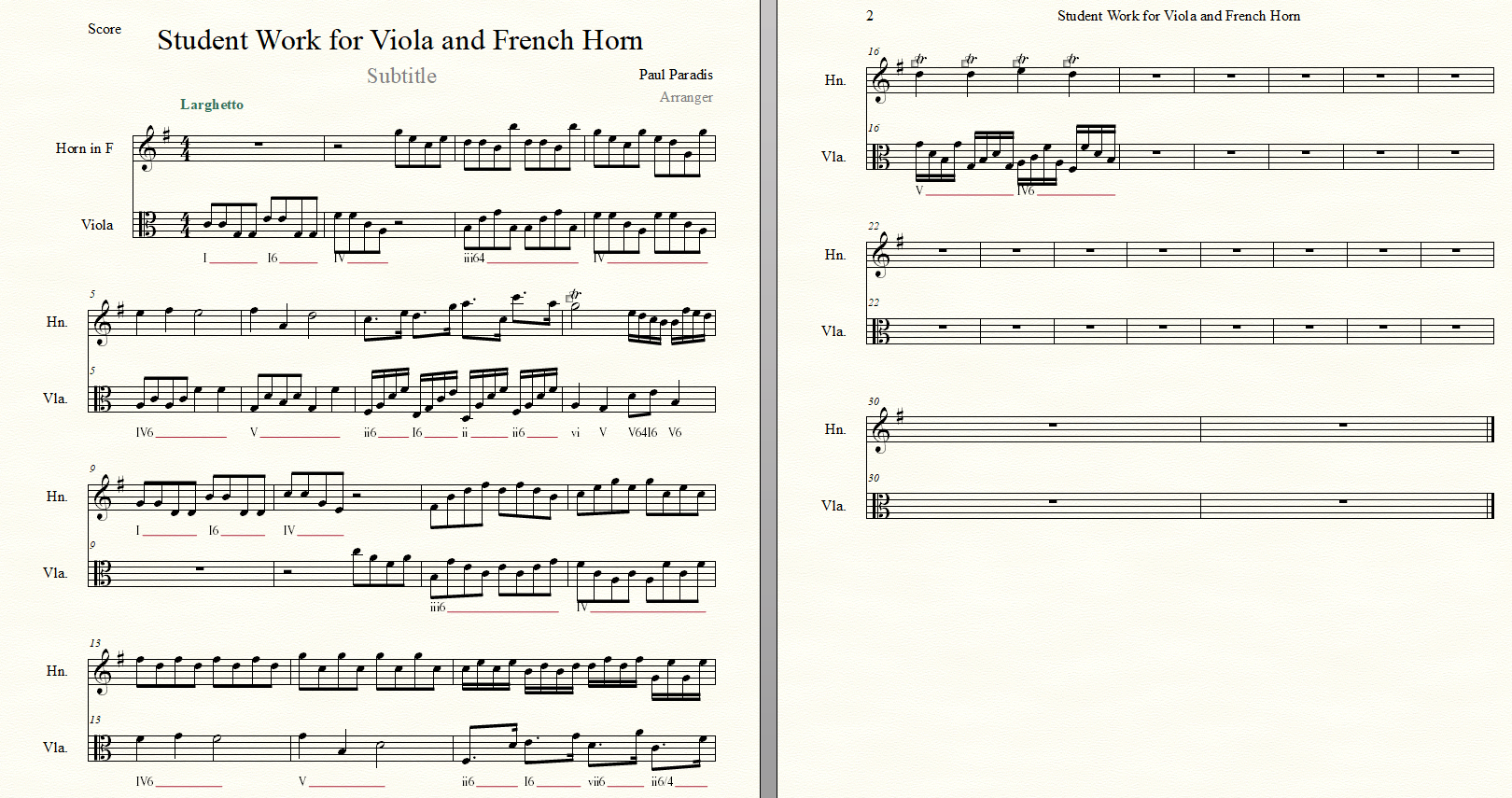
The student work is well on its way now:
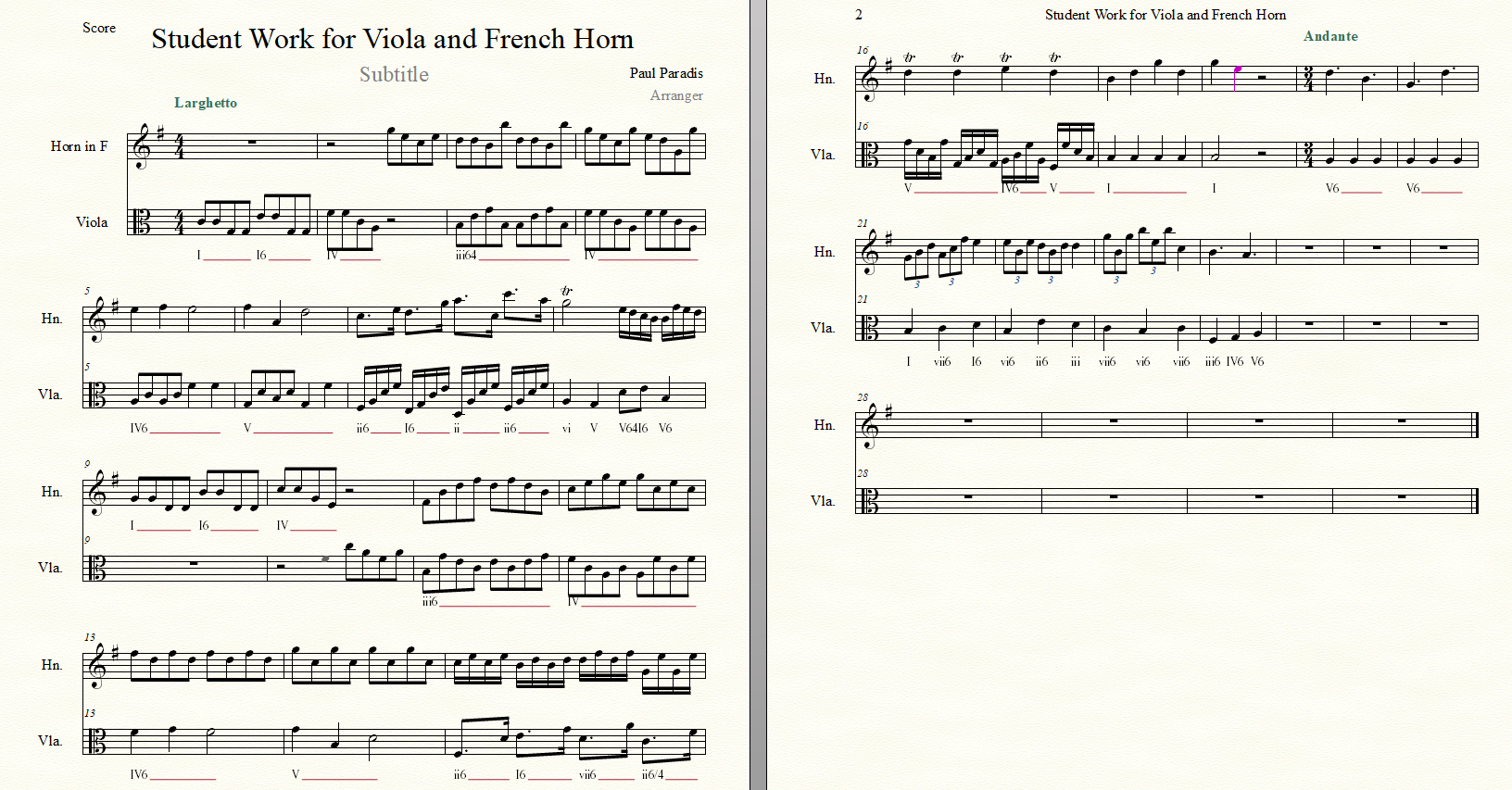
I am looking to finish this up by Wednesday of next week. How my composition teacher will receive this is going to be interesting. I suspect the discipline I have displayed will be appreciated, but the completely amateurish nature of the music will give rise to some needed constructive criticism. I need to take more time to actually look at established orchestration practices for the instruments I choose to write for. I need to apply more focused effort in this direction.

Electronic Music

I have determined what ideas I will be developing next, looking to produce two to three DIA tracks, either as one release or as a set of singles. Looking forward to getting started on this when I finish up my student work for Viola and French Horn. Ready to inflict some more noise on the world.

Today's listening: 

Miles Davis: Bitches Brew (https://tinyurl.com/4jyeenss)
07/14/2023

  • Leave a comment
  • Share
    Department of Industrial Accidents Blog Post #7: Thursday, July 13, 2023, 11:40 p.m. E.S.T.

    Share link

Department of Industrial Accidents Blog Post #6: Wednesday, July 12, 2023 10:58 P.M. EST 


Production:

Today I explored transients and rms values. For transients I found a really great article on the izotope website: (https://tinyurl.com/mpyeacny) From what I have gathered, the transient is the first and most prominent part of any newly produced sound, and learning to control transients in the mixing and mastering stages is an important part of the recording process. I will be looking to clarify this concept a little more but I feel confident that I have th basic idea.

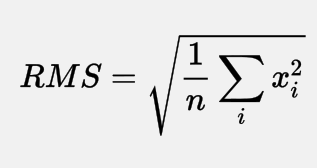
For rms values I referenced this article here: (https://tinyurl.com/5n7bmcsn) I found rms ('root mean square') to be a more daunting, but my basic takeaway is that rms values give something akin to a mean average loudness of a sound wave based on the power of the input signal, something like that. I am going to have to revisit this one a couple times and possibly look up a layman explanation of the mathematical formula that defines it:

With this basic clarification out of the way, back to mixingwithmike.com


Theory:

Will be getting back to counterpoint, harmony. and form studies next week.

Counterpoint:

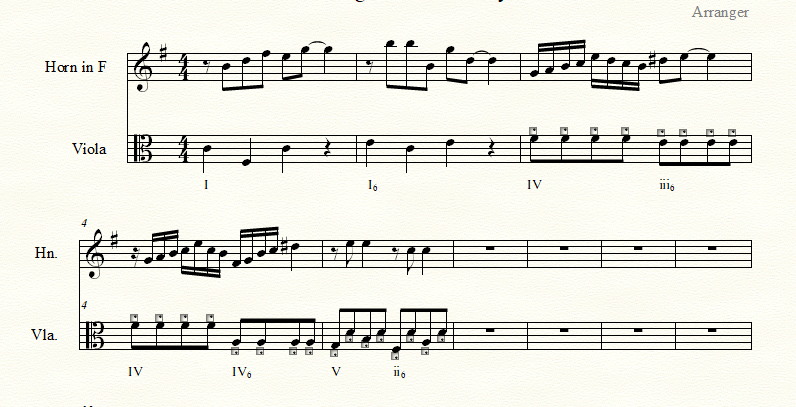
Now that I have figured out most of what I need to know about adding Roman Numeral notation to my compositions (for the purposes of self-administered harmonic analysis), and after tinkering around with the four-part progression I wrote (exerpted here):

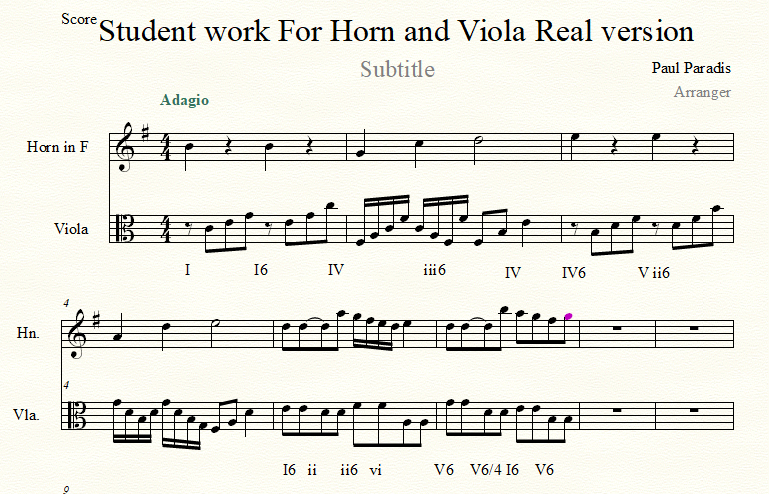
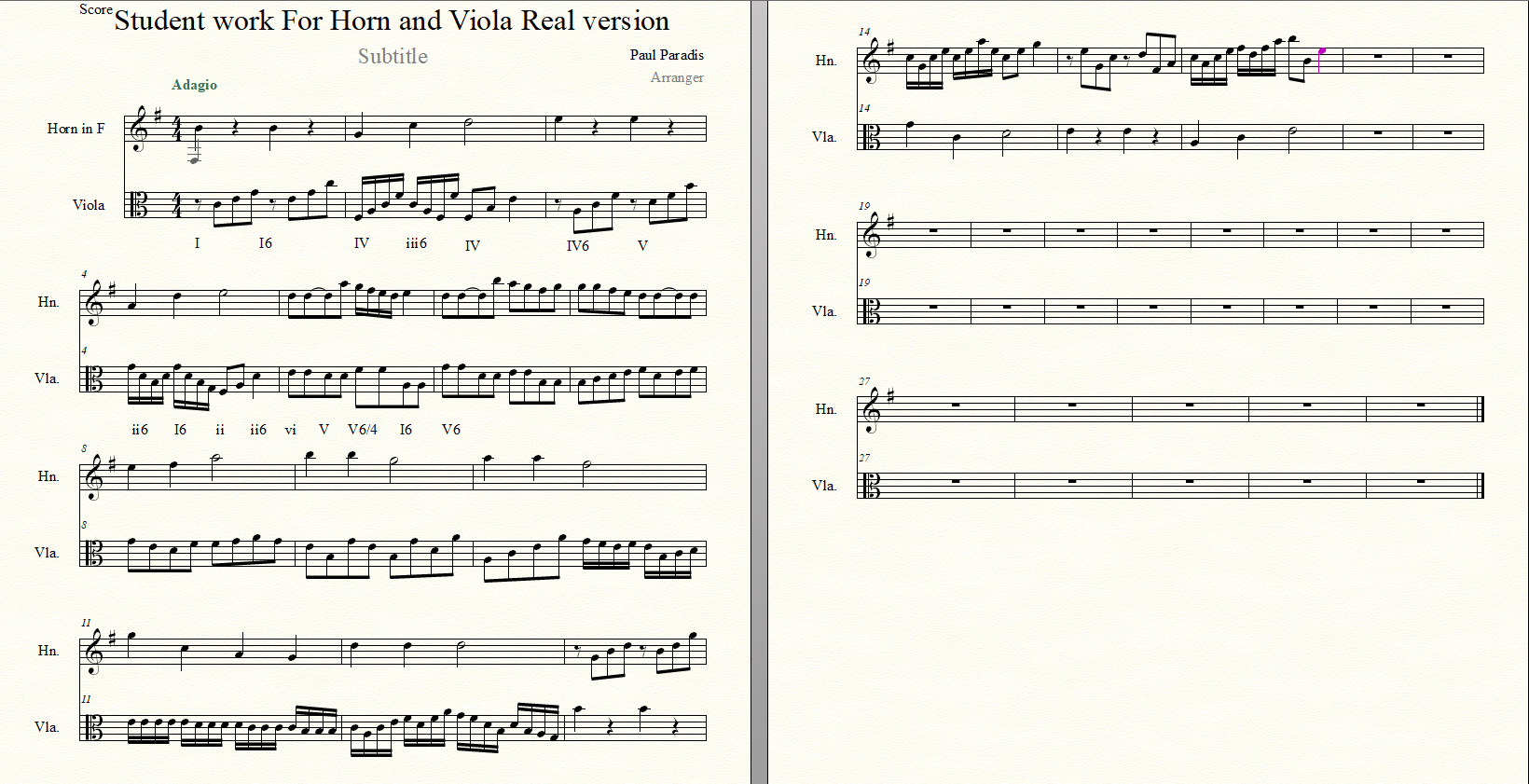
I have finally started gaining traction with the composition I have been trying to develop from this progression:

I actually completed about a third of the work. Looking forward to finishing this piece, as it will be the first step in reinvigorating my command of classical tonal harmony and the relationship of this harmonic language to the formal concepts I am looking to develop in Department of Industrial Accidents.

Electronic Music

I have a store of about 5 or 6 seed ideas, and once I finish the composition referenced above, I am going to dive in and start developing one or two. I will be looking to create shorter works capped by a better concept of how to produce music. 

In essence, these concepts: production (mixing and mastering), compositional form, and electronic timbres, coupled with the expression of specific philosophical concepts that reflect my world view: this is the basic analysis of Department of Industrial Accidents. More DIA releases slated for release in the next couple of months. 

07/12/2023

  • Leave a comment
  • Share
    Department of Industrial Accidents Blog Post #6: Wednesday, July 12, 2023 10:58 P.M. EST

    Share link

Department of Industrial Accidents Blog Post #5: Tuesday, July 11, 2023 1:03 E.S.T. 


Production

(https://www.mixingwithmike.com/)

Functional Compression Part 1: Drums, Perc, Guitars: Building on what was already done, today's videos started talking about applying compressions to drums, percussion, and guitars to the project being worked on during the course. I am going to have to do a little bit of supplementary learning here, as I really don't note what r.m.s. values are, and I also realized that I don't quite understand transients. I will be undertaking a brief detour to clarify these things and reviewing this video before heading to Functional Compression Part 2

Theory

I did nothing theory related today as I returned from a trip over the weekend and did not have much time today.

Composition

The only thing of any real note was finally figuring out how to do Roman Numeral notation in Finale. The end result looks much better than through using the Text tool. Part of this had to do with getting back into my groove after the weekend excursion. Here is an example of the improved Roman Numeral analysis when setup correctly:

Here is an example using the text tool. The difference in visual representation of Roman Numerals is striking, and it is clear how much cleaner it looks by doing the more involved setup:


Electronic Music

Nothing right now. Getting ready to create more after finishing up with my current round of composition work for my composition lessons, also affected by timing issues from the trip.

Today's Listening:

Controlled Bleeding: Words of the Dying (https://tinyurl.com/28b52zzm)

07/11/2023

  • 1 comment
  • Share
    Department of Industrial Accidents Blog Post #5: Tuesday, July 11, 2023 1:03 E.S.T.

    Share link

Department of Industrial Accidents Blog Post #4: Friday, July 7, 2023 


Production Studies 

(mixingwithmike.com)

Tonight there was preparation for an upcoming out of town visit this weekend, so the evening was not as productive. HPF, LPF, and subtractive eq: Building on the understanding of setting up gain staging at the beginning of mix preparation, and using a vumeter to help the overall gain support low volume levels, and also mixing at very low volumes, the use of filters and subtractive eq was employed as a next stage. According to Mike White, cutting/manipulating frequency ranges should happen on top of a solidly managed base structure, including the aforementioned gain staging and mixing at very low volume levels. I will be going back through the whole course of videos with more focus after winding through the initial viewing. This way I can form an overall picture of the whole process and then go back through to get my basic gameplan in place.


Theory:

Nothing right now. Planning on more harmony, counterpoint, and studies of form from The Complete Musician by Stephen Laitz


Composition Work:

The piece has become more fleshed out. Some kind of spacing issue transpired with the typed-in chord symbols. 

I have decided to keep developing this piece based on the initial set of phrases that resulted, and then go back to create something that actually conforms to the chord progression I wrote.


Electronic Music

Commencing work on More Department of Industrial Accidents releases after finishing up my current of compositional work.


Today's listening:

Enter the Wu-Tang

Beethoven Piano Sonatas Op. 109, 110, 111

Fishbone, The Reality of My Surroundings

Miles Davis, Kind of Blue

Voivod, Dimension Hatross


07/08/2023

  • Leave a comment
  • Share
    Department of Industrial Accidents Blog Post #4: Friday, July 7, 2023

    Share link

Department of Industrial Accidents Blog Post #3: Thursday, July 6, 2023 


Music Production:


(mixingwithmike.com)

Mix mapping/mix visualization, gain staging, using reference mixes, levels and panning: I have learned a lot from the first 15 lessons of the basic mixing course. Learning about gain staging and reference mixes, coupled with the idea of mixing being about creating an ‘image’ is helping me form a much more coherent concept of mixing, and I'm still only at the beginning of this journey. I am looking forward to diving in and starting to work with these concepts in my work with Dept. of Industrial Accidents.

Theory:

Nothing today. More review to come soon. For now, focusing on the Fundamentals of Mixing program and working on my student compositional work.

Composition Work:

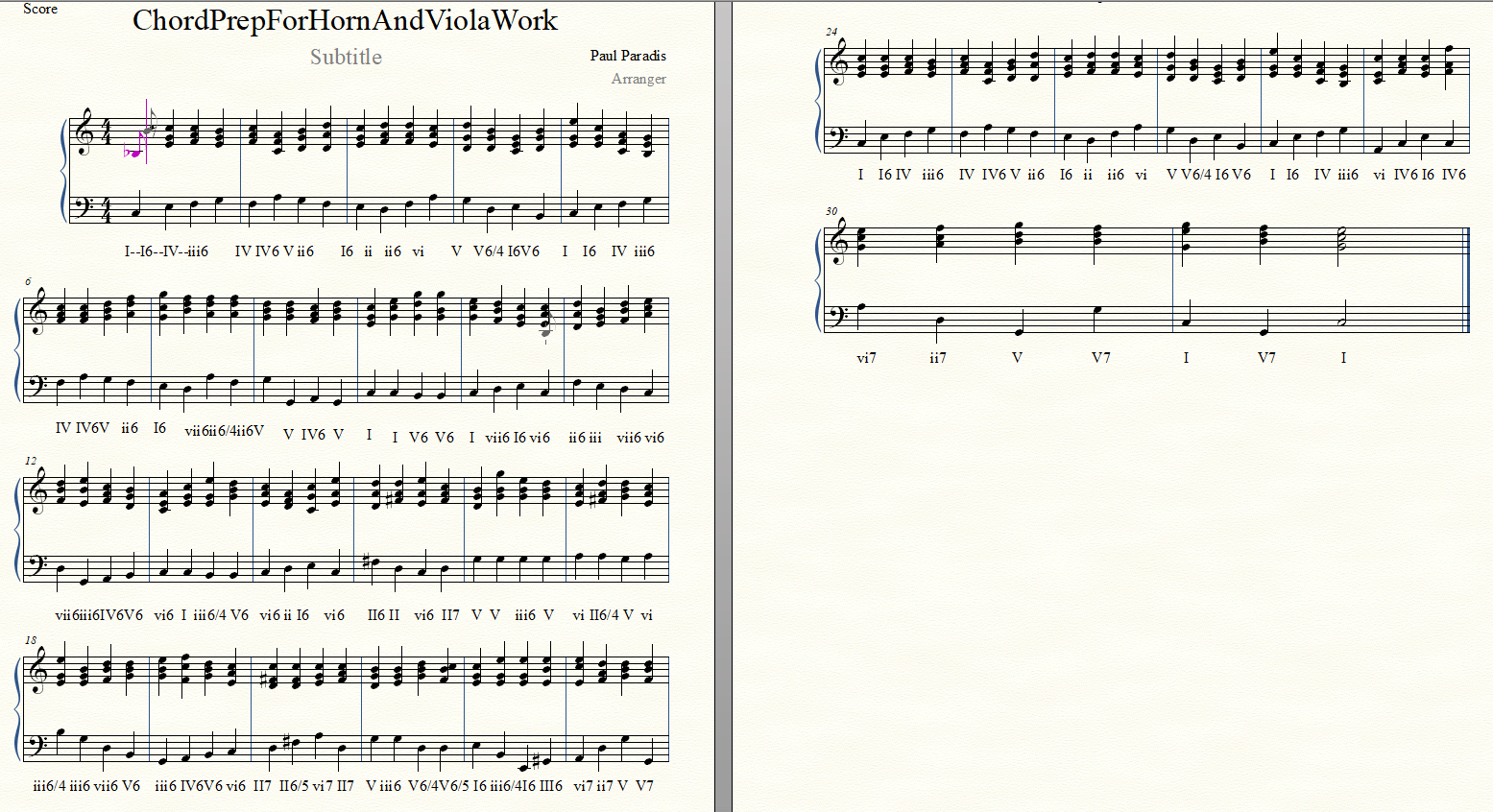
The harmonic prep work is finished:


From there I have started to compose the actual music:


This will be a little slow going for a bit as I get back in the swing of it with applying a predetermined harmonic sequence to an actual compositional work and not just working from inspiration. I am determined to improve my compositional technique. I have decided to apply chord symbols to the composition itself to show how the harmonic flow from the chord progression maps to the actual work. The spacing on the chord symbols needs to be fixed.

 I will aspire to create as musical a work as possible, but it will probably be very clunky and amatuerish. As a first step back in this direction it is fine. The important thing is to do the work. 

Electronic Music:

Nothing today. For now focusing on the student work and mixing fundamentals.

Today's listening:

Harpsichord works by Girolamo Frescobaldi.

07/07/2023

  • Leave a comment
  • Share
    Department of Industrial Accidents Blog Post #3: Thursday, July 6, 2023

    Share link

Department of Industrial Accidents blog post #2: Wed/Thursday, July 5/6 2023 

Mixing Studies:

Mixing with Mike (mixingwithmike.com):

Mix mapping (creating a visual approach): interesting technique for creating a visual schematic to help realize the imaging of the mix; some things are starting to click more

Composition work:

Fleshing out the basic harmonic flow for the Viola and French horn piece I will be creating for my next composition lesson:

Electronic music:

Checking out my small stock of seed ideas to settle on the next project

Today's listening:

Luigi Dallapiccola: various piano works

Boards of Canada: Geogaddi

Abstraktius Artimus: Return of the Boogie Man, In a Rage, and several others

07/06/2023

  • Leave a comment
  • Share
    Department of Industrial Accidents blog post #2: Wed/Thursday, July 5/6 2023

    Share link

Department of Industrial Accidents Blog Post #1: Tuesday, July 4, 2023  

Mixing Studies:

Session Organization: grouping similar tracks together/color coding

Mix Signal Flow: Routing/bussing

Gain Structure:  Track inputs, Stems, Master fader: attenuating the gain from the initial input through to the master fader, gauging each track with a vu meter

Composition work:

Review of Period structure, referencing excerpts by Mozart and others

Today I am starting work on a new piece of music for my next composition lesson. Planning on writing a work for either cello and French horn or Viola and French horn. Planning on developing the form through creating a set of chord progressions in shorthand notation outlining a set of periods, and then developing the work from there. Will be referencing the Sadler orchestration book to ensure proper attention to details relevant to the specific instruments in question, including bowings/fingerings for the string instrument, blowing/fingering techniques for the French horn, nuances in ranges, etc…

Today's listening: Allan Holdsworth, I.O.U.; The Shape of Jazz to Come, Ornette Coleman


07/04/2023

  • Leave a comment
  • Share
    Department of Industrial Accidents Blog Post #1: Tuesday, July 4, 2023

    Share link

First Prev 1 … 7 8 Next Last

Some images ©

  • Log out